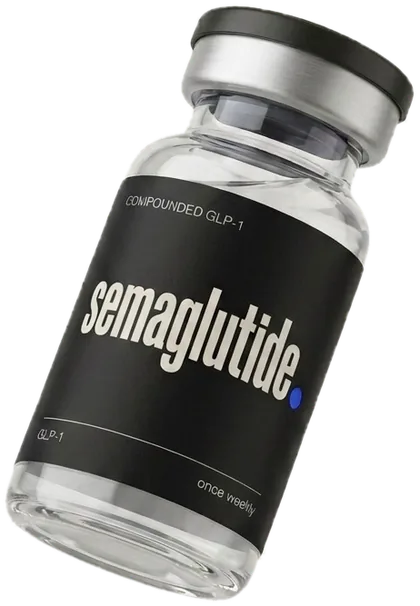
Last updated November 11, 2026 · Reviewed by the Gala Health team
Vial vs pen at a glance
| Brand-name pen | Compounded vial | |
|---|---|---|
| How the dose is set | Fixed by the pen strength | You measure it with a syringe |
| What you need to know | Which pen strength you were prescribed | Dose in mg, concentration in mg/mL and volume in mL (or units) |
| Changing the dose | A new pen strength | Often the same vial, a different volume, as your prescriber directs |
| Doses per container | Single-dose pens, or a multi-dose pen for some brands | Usually several doses per vial |
| FDA approval | Yes, for its label uses | No. Compounded medications are not FDA-approved |
Brand-name tirzepatide also comes in vials. The Zepbound® label lists single-dose pens and single-dose vials that hold 0.5 mL, plus a multi-dose vial and a KwikPen that each hold 4 doses. Wegovy® injection comes in pens. So vial vs pen is about the device, not only brand vs compounded.
Vial dosing math: mg, mL and units
Three numbers describe a vial dose. The dose is the amount of medicine, in milligrams (mg). The concentration, printed on the vial label, is how many mg are in each milliliter (mg/mL). The volume is how much liquid you draw. Insulin-style syringes are often marked in units, and on a U-100 syringe 100 units equal 1 mL.
- Volume in mL = dose in mg ÷ concentration in mg/mL.
- Units on a U-100 syringe = volume in mL × 100.
| Example only | Dose | Concentration | Volume | U-100 units |
|---|---|---|---|---|
| Semaglutide | 0.25 mg | 2.5 mg/mL | 0.1 mL | 10 units |
| Tirzepatide | 2.5 mg | 10 mg/mL | 0.25 mL | 25 units |
These are arithmetic examples, not dosing instructions. Concentrations differ between pharmacies and can change between shipments, so the same number of units can mean a different dose. Use only the dose, concentration and syringe on your own prescription and pharmacy label.
The FDA says it has received reports of adverse events, some requiring hospitalization, that may be related to dosing errors with compounded semaglutide, where patients measured and injected the wrong dose or health care professionals miscalculated it. Get your dose in writing, in the same unit as your syringe markings, and message Gala's care team before your first injection if any number does not match.
Injection supplies for a vial
- A syringe sized for your dose. The Zepbound label tells vial users to use a syringe appropriate for the dose, for example a 1 mL syringe that can measure 0.5 mL or 0.6 mL.
- A new sterile needle and syringe for every dose. The FDA warns that reusing them can contaminate the medicine.
- A sharps container for used needles and syringes.
- Fridge space: injectable GLP-1 medicines need refrigeration as their labels or pharmacy instructions direct.
Gala includes a home injection kit with your medication, so you are not left to buy supplies separately. For the steps of an injection and sharps disposal, see how to inject a GLP-1.
The 28-day rule for multi-dose vials
The FDA recommends that multi-dose vials of sterile medicine be used within 28 days after first use, because the contamination risk rises after that. Its advice to patients is to discard the vial 28 days after first use even if medicine remains, and not to keep using it past 28 days even if the compounder's instructions say longer. Write the date you first pierce a vial on its label.
Is a vial harder than a pen?
It takes one more step: drawing the dose. Once your dose, concentration and syringe are clear, the injection itself is the same: once a week, under the skin of the stomach or thigh, or the upper arm (the Zepbound label says the back of the upper arm should be injected by another person). A vial also lets your provider move you to a new dose without a new device, and Gala includes every dose level in your plan price, so a higher dose does not cost more. See does the GLP-1 price go up with the dose.
Gala offers compounded semaglutide, compounded tirzepatide and brand-name Ozempic®. A licensed provider reviews your online assessment and prescribes only if it is appropriate for you. If prescribed, your medication and injection kit ship free, and you can log every shot and message your care team in the Gala GLP-1 app. Start your online GLP-1 assessment, or read more about compounded GLP-1 medications.
This article is for information only and is not medical advice. If the number on your instructions does not match your syringe, stop and ask your provider or pharmacy before injecting.
Frequently asked questions
Does compounded semaglutide or tirzepatide come in pens?
Compounded semaglutide and tirzepatide usually come in vials that you draw into a syringe. Gala ships compounded GLP-1 as vials with a home injection kit included. Brand-name Wegovy comes in pens, and brand-name Zepbound comes in pens, vials and a KwikPen.
How many units is my compounded dose?
It depends on your vial's concentration. Volume in mL equals your dose in mg divided by the concentration in mg/mL, and on a U-100 syringe each 0.01 mL is 1 unit. Always use the dose and units on your own prescription and pharmacy label, and ask your provider if anything is unclear.
Can I reuse a syringe or needle?
No. The FDA says to use a new, sterile needle and syringe for each dose, because reusing them can contaminate the medicine. The Zepbound label gives the same instruction for vial users.
How long is a compounded GLP-1 vial good for after opening?
The FDA recommends discarding a multi-dose vial 28 days after first use, even if medicine remains and even if the compounder's instructions say it can be used longer. Follow the storage directions on your pharmacy label as well.
Is a vial less accurate than a pen?
A pen delivers a fixed dose, while a vial dose depends on measuring the right volume. Accuracy comes from knowing your dose in mg, your concentration and your syringe markings, and from asking before your first injection if any number does not match.
Ready to talk to a provider?
Your answers go to a licensed provider, who decides whether treatment is right for you. Learn more about Weight Loss.
More Weight Loss guides
- compounded vs brand GLP-1
- GLP-1 and alcohol guide
- GLP-1 dosing schedule
- GLP-1 side effects guide
- switching GLP-1 providers
- how GLP-1 approval works online
- whether you need a video visit for a GLP-1
- whether the GLP-1 price goes up with the dose
- how long GLP-1 takes to work
- how to inject GLP-1
- Ozempic vs Wegovy
- semaglutide vs tirzepatide comparison
- stopping GLP-1 and weight regain
- Wegovy pill vs injection
- what to eat on GLP-1
- Zepbound vs Mounjaro
- tirzepatide pills
- GLP-1 without a membership fee
- compounded tirzepatide vs Zepbound
- compounded tirzepatide dosage chart
- compounded semaglutide dosage chart
- GLP-1 cost without insurance
- best online GLP-1 providers
- Ro vs Hims for weight loss
- Hims weight loss alternatives
Sources
- Eli Lilly. ZEPBOUND (tirzepatide) prescribing information. FDA-approved label.
- Novo Nordisk. WEGOVY (semaglutide) injection and tablets prescribing information. FDA-approved label.
- U.S. FDA. FDA's concerns with unapproved GLP-1 drugs used for weight loss.
- U.S. FDA. Safely Using Sharps (Needles and Syringes) at Home, at Work and on Travel.
This article is for general information and is not medical advice. Talk to a licensed provider about your own health.