Last updated November 11, 2026 · Reviewed by the Gala Health team
Quick comparison
| Zepbound® | Compounded tirzepatide | |
|---|---|---|
| Active ingredient | Tirzepatide | Tirzepatide |
| FDA approval | Approved for weight reduction and long-term maintenance, and for obstructive sleep apnea in adults with obesity | Not approved |
| FDA review of safety, effectiveness and quality before marketing | Yes | No |
| Made by | Eli Lilly | A state-licensed 503A pharmacy or an FDA-registered 503B outsourcing facility |
| How it comes | Single-dose pens and vials (0.5 mL), or a multi-dose vial or KwikPen with 4 doses | Usually a multi-dose vial; concentration varies by pharmacy |
| Dosing | 2.5 mg weekly for 4 weeks, then 2.5 mg steps; maintenance 5, 10 or 15 mg | As prescribed; dose in mg drawn as a volume set by the vial's concentration |
| Trial results | Apply to Zepbound | Do not automatically apply |
| Self-pay price | $299 to $699 a month by dose (LillyDirect) | From $99 a month at Gala, the same at every dose level |
Zepbound facts from its prescribing information; price checked on 2026-11-11 on zepbound.lilly.com (see Sources).
Approval and oversight
Zepbound went through the FDA's review for safety, effectiveness and quality, and its label sets the doses, warnings and approved uses. Compounded tirzepatide does not. According to the FDA, compounded drugs are prepared for a patient by a licensed pharmacist in a state-licensed pharmacy (503A, overseen mainly by the state board of pharmacy) or by an outsourcing facility registered with the FDA (503B, which must follow current good manufacturing practice). Compounded medications are not FDA-approved, and they are not generics.
The FDA has also warned about fraudulent compounded semaglutide and tirzepatide sold with false label information, including labels naming pharmacies that did not make the product. A real prescription should come from a licensed provider and be filled by a licensed pharmacy whose name and address are on the label. More on this in compounded vs brand-name GLP-1.
Dosing: same milligrams, different format
The Zepbound label starts at 2.5 mg once weekly for 4 weeks. The 2.5 mg dose is for starting treatment and is not approved as a maintenance dose. The dose then goes to 5 mg and can rise in 2.5 mg steps after at least 4 weeks on the current dose. Maintenance is 5 mg, 10 mg or 15 mg weekly for weight management (10 mg or 15 mg for sleep apnea), with a maximum of 15 mg.
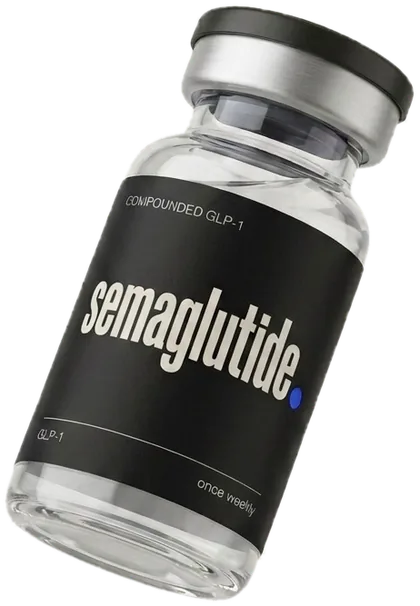
With Zepbound, a pen or single-dose vial holds one fixed dose. A compounded vial holds several doses, and you draw a volume that depends on the vial's concentration, so the same dose in milligrams can be a different number of units from one pharmacy to another. The FDA has received adverse event reports linked to dosing errors with compounded semaglutide, and reports linked to compounded semaglutide or tirzepatide prescribed beyond the doses or titration speed in the FDA-approved label. See the full schedule and the mg to units math in our compounded tirzepatide dosage chart.
Evidence
In the Zepbound label's 72-week trial of 2,539 adults with obesity, alongside diet and activity counseling, average weight change was a 15.0% loss with 5 mg, 19.5% with 10 mg and 20.9% with 15 mg, compared with 3.1% for placebo. Those numbers belong to Zepbound. Clinical trial results for the brand-name drug should not be assumed to apply to compounded tirzepatide, and they are not a prediction for any one person.
The safety information on the Zepbound label, including its boxed warning about thyroid C-cell tumors, applies to tirzepatide; ask your provider how it applies to you. See GLP-1 side effects.
Price without insurance
Lilly sells the Zepbound KwikPen directly to self-pay patients with a prescription through LillyDirect, priced by dose:
| Zepbound KwikPen dose | Regular self-pay price per month | Offer |
|---|---|---|
| 2.5 mg | $299 | |
| 5 mg | $399 | |
| 7.5 mg | $499 | $449 if each refill is bought within 45 days of the last delivery |
| 10 mg, 12.5 mg and 15 mg | $699 | $449 if each refill is bought within 45 days of the last delivery |
Prices checked on 2026-11-11 on zepbound.lilly.com (see Sources). Prescription required; Lilly can change or end these prices at any time.
At Gala, compounded tirzepatide online starts at $99 a month on the annual plan, billed once a year. The plan costs the same at every dose level, with no membership fee, and your exact price depends on your state, dose and plan; you see it before you pay. More prices in GLP-1 cost without insurance.
What to ask your provider
- Is a brand-name product or a compounded one right for me, and why?
- Which pharmacy fills my prescription, and is it a 503A pharmacy or a 503B outsourcing facility?
- What is my dose in mg, my vial's concentration in mg/mL, and the volume or units to draw on my syringe?
- How fast will my dose go up, and what should I do if I do not tolerate a step?
- Who do I contact with side effects or dosing questions after the medicine arrives?
Getting started with Gala
Gala does not offer brand-name Zepbound®. Gala offers compounded tirzepatide, along with compounded semaglutide and brand-name Ozempic®. A licensed provider reviews your online assessment and prescribes only if it is appropriate for you. If prescribed, your medication ships to your home with a home injection kit, you can message your care team, and your provider can adjust your dose over time.
To see which options may fit, start your online GLP-1 assessment, or compare Zepbound vs Mounjaro and semaglutide vs tirzepatide.
This article is for information only and is not medical advice. Talk to your healthcare provider about what is right for you.
Frequently asked questions
Is compounded tirzepatide the same as Zepbound?
No. Both contain tirzepatide, but Zepbound is an FDA-approved product made by Eli Lilly, while compounded tirzepatide is prepared by a licensed pharmacy on a prescription and is not FDA-approved. Concentration and labeling can differ between pharmacies.
Is compounded tirzepatide FDA-approved?
No. Compounded medications are not FDA-approved, and the FDA does not review their safety, effectiveness or quality before they are marketed.
Is compounded tirzepatide cheaper than Zepbound?
At Gala, yes. On LillyDirect, checked on 2026-11-11, the Zepbound KwikPen costs $299 to $699 a month by dose, or $449 for 7.5 mg to 15 mg with on-time refills. At Gala, compounded tirzepatide starts at $99 a month on the annual plan, the same at every dose level.
Do Zepbound trial results apply to compounded tirzepatide?
No. Trial results belong to the approved brand-name product and should not be assumed to apply to compounded versions.
Are compounded tirzepatide doses the same as Zepbound doses?
The dose is prescribed in milligrams, and the only FDA-approved weight-management schedule is Zepbound's: 2.5 mg weekly for 4 weeks, then 2.5 mg steps at least 4 weeks apart, to 5, 10 or 15 mg. A compounded vial is measured by volume, which depends on its concentration, so always follow your prescription and vial label.
Does Gala offer Zepbound?
No. Gala offers compounded tirzepatide, which is not FDA-approved, after a licensed provider reviews your online assessment and decides it is appropriate for you.
Ready to talk to a provider?
Your answers go to a licensed provider, who decides whether treatment is right for you. Learn more about Weight Loss.
More Weight Loss guides
- compounded vs brand GLP-1
- GLP-1 and alcohol guide
- GLP-1 dosing schedule
- GLP-1 side effects guide
- switching GLP-1 providers
- how GLP-1 approval works online
- compounded GLP-1 vials vs pens
- whether you need a video visit for a GLP-1
- whether the GLP-1 price goes up with the dose
- how long GLP-1 takes to work
- how to inject GLP-1
- Ozempic vs Wegovy
- semaglutide vs tirzepatide comparison
- stopping GLP-1 and weight regain
- Wegovy pill vs injection
- what to eat on GLP-1
- Zepbound vs Mounjaro
- tirzepatide pills
- GLP-1 without a membership fee
- compounded tirzepatide dosage chart
- compounded semaglutide dosage chart
- GLP-1 cost without insurance
- best online GLP-1 providers
- Ro vs Hims for weight loss
- Hims weight loss alternatives
Sources
- Eli Lilly. ZEPBOUND (tirzepatide) prescribing information. FDA-approved label.
- Eli Lilly. Zepbound savings and coverage. Checked 2026-11-11.
- U.S. FDA. Compounding and the FDA: questions and answers.
- U.S. FDA. FDA's concerns with unapproved GLP-1 drugs used for weight loss.
This article is for general information and is not medical advice. Talk to a licensed provider about your own health.