Last updated November 13, 2026 · Reviewed by the Gala Health team
Why estrogen alone is enough without a uterus
Estrogen taken by itself makes the lining of the uterus (the endometrium) grow. Over time, unopposed estrogen in a woman who still has a uterus raises the risk of endometrial cancer, which is why The Menopause Society recommends adequate progestogen for every woman with an intact uterus on systemic estrogen (its strongest grade of evidence, Level I).
Remove the uterus and that reason disappears. The prescribing information for estradiol tablets says it plainly: "A woman without a uterus does not need progestin." Estrogen-only therapy is the standard regimen after a hysterectomy, and it leaves out the progestogen, which The Menopause Society links to side effects such as mood swings.
The FDA label change confirms the same split. When FDA began rewriting the hormone therapy boxed warning in November 2025, it removed the cardiovascular, breast cancer and dementia references but kept the endometrial cancer warning on systemic estrogen-alone products, a warning aimed at women who still have a uterus.
The main exception is endometriosis that remains after surgery. The estradiol tablet label notes that a few cases of malignant change in leftover endometrial implants have been reported with estrogen alone after hysterectomy, and says that for known residual endometriosis "the addition of progestin should be considered."
If you are not sure exactly what was removed, check your operative report. A total hysterectomy takes the uterus and cervix, a supracervical (partial) hysterectomy leaves the cervix, and either one may or may not include the ovaries. Tell your provider which one you had.
Ovaries removed or kept: what changes
Whether you need hormones at all depends less on the uterus than on your ovaries, because they make the estrogen.
| Your surgery | What happens to your hormones | What the evidence says about HRT |
|---|---|---|
| Both ovaries removed before natural menopause | Surgical menopause: estrogen, progesterone and testosterone fall abruptly, and hot flashes tend to be more frequent and more severe than in natural menopause | Unless there is a contraindication, The Menopause Society recommends hormone therapy at least until the average age of menopause, about 52, and says early estrogen reduces hot flashes, vaginal symptoms and bone loss |
| Ovaries kept, before menopause | The ovaries keep working, but you have no periods to tell you when they slow down | In a Duke cohort, women who kept both ovaries still had a higher risk of earlier ovarian failure than women without surgery (14.8% vs 8.0% after 4 years, all hysterectomy patients combined) |
| Hysterectomy after natural menopause | No change: your ovaries had already stopped making most of their estrogen | Same decision as any woman in menopause, except that estrogen alone is enough |
With your ovaries in place and no periods, menopause shows up as symptoms instead of a missed cycle: hot flashes, night sweats, poor sleep or brain fog. If those start in your 40s, it is reasonable to ask about treatment even though you never had a final period. Our guide to when to start HRT covers the timing window.
One limit to know: Gala's providers prescribe systemic estrogen from age 40 to 65. If your ovaries were removed before 40, you need estrogen at full replacement doses for years, and that care belongs with an in-person gynecologist or menopause specialist. Between 35 and 39, Gala can prescribe vaginal estradiol for local symptoms only.
What the WHI estrogen-alone trial found
The largest trial of estrogen-only therapy is the Women's Health Initiative arm that enrolled 10,739 women aged 50 to 79 who had had a hysterectomy. Half took conjugated equine estrogens (0.625 mg a day) and half a placebo. The NIH stopped it in 2004, after an average of 6.8 years.
| Outcome | Estrogen alone vs placebo |
|---|---|
| Stroke | Higher: 12 more strokes per 10,000 women per year (hazard ratio 1.39) |
| Hip fracture | Lower: 6 fewer per 10,000 women per year (hazard ratio 0.61) |
| Coronary heart disease | No significant difference (hazard ratio 0.91) |
| Invasive breast cancer, during the trial | Fewer cases, not statistically significant (hazard ratio 0.77) |
| Invasive breast cancer, after 20+ years of follow-up | Significantly lower incidence (0.30% vs 0.37% a year, hazard ratio 0.78) and lower breast cancer deaths (hazard ratio 0.60) |
| Total deaths | No difference (hazard ratio 1.04) |
Sources: Anderson 2004 and Chlebowski 2020 in JAMA (see Sources). Hazard ratio below 1 means fewer events with estrogen.
Two details matter when you apply this to yourself. First, age: in the 13-year follow-up, women who started estrogen alone at 50 to 59 had 19 fewer harmful events per 10,000 women a year than placebo, while women who started at 70 to 79 had 51 more. Second, the drug: the WHI used conjugated equine estrogens in women averaging 63 years old, not the estradiol prescribed today to women in their 40s and 50s.
The breast cancer result is the clearest difference from combined HRT. In the same long-term follow-up, estrogen plus a progestin raised breast cancer incidence (hazard ratio 1.28), while estrogen alone lowered it. For the full picture by age, route and history, see is HRT safe.
Your options after a hysterectomy, and what they cost at Gala
Without a uterus, the choice is mainly about route: how the estradiol gets into your body.
| Option | Best for | Price at Gala |
|---|---|---|
| Estradiol pill | Simplest routine, one tablet a day | $69/month ($207 every 12 weeks) |
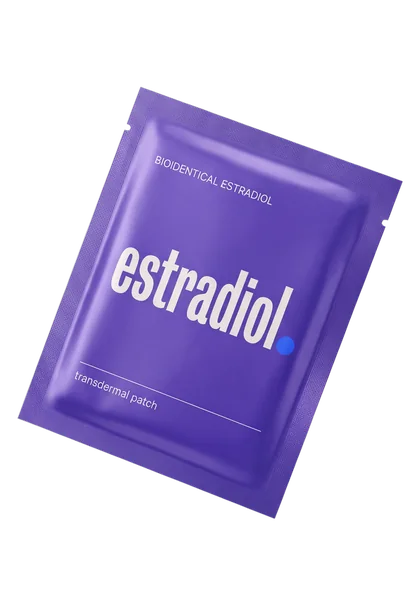
| Estradiol patch or gel | Skipping the liver's first pass, linked to a lower clot risk in observational studies; Gala's protocol uses it instead of the pill if you use nicotine or have a thyroid condition | $99/month ($297 every 12 weeks) |
| Vaginal estradiol | Dryness, painful sex or urinary symptoms, alone or added to a pill or patch | $99/month ($297 every 12 weeks) |
| Non-hormonal (paroxetine or desvenlafaxine) | Hot flashes when estrogen is not an option | $99/month ($297 every 12 weeks) |
Prices from Gala's HRT checkout, which shows the exact amount for your plan before you pay. They depend on the form, not on how many hormones are in the plan, so going without progesterone does not change them. Medication, provider review and follow-up are included; no insurance is needed and FSA or HSA cards are accepted.
For how the pill and the patch compare in day-to-day use and in risk, read estradiol patch vs pill. If you are comparing pharmacy cash prices, HRT cost without insurance breaks them down by form.
When the reason for your hysterectomy matters
Most hysterectomies are done for fibroids, heavy bleeding or prolapse, and none of those change the HRT decision. A few reasons do:
- Endometrial cancer. The Menopause Society says hormone therapy may be used for bothersome symptoms after hysterectomy for low-grade, Stage I endometrial cancer, with your oncologist involved, but is not advised for high-grade or advanced disease or for uterine sarcomas. Gala's providers do not prescribe systemic estrogen after endometrial, ovarian or cervical cancer, so that conversation belongs with your oncology team; a non-hormonal option may still be possible.
- Endometriosis. Beyond the label's advice on residual implants, Gala does not offer the estradiol pill with a history of endometriosis; the patch or gel can still be prescribed if your provider agrees.
- Breast cancer history. Gala does not prescribe systemic estrogen after breast cancer or atypical ductal hyperplasia, and a video visit with the provider is required.
Any bleeding from the vagina after a hysterectomy, or after menopause, needs an in-person exam. It is not something an online service should treat.
What happens at Gala when you report a hysterectomy
The online assessment asks about your cycle (one answer is "Changes due to hysterectomy") and about past surgery ("Hysterectomy (removal of uterus)"). Either answer marks you as having no uterus, and from then on:
- Progesterone is no longer required. Your recommended plan is estradiol alone, and the results page tells you why: no uterus to protect.
- A licensed provider still reviews your full history, including clots, stroke, liver disease and cancers, before prescribing anything.
- If you are 40 to 65 you can be offered the pill, patch or gel; at 66 and older, vaginal estradiol only.
- Medication ships to your door, and dose changes happen by message with your care team.
If you are unsure what to ask, note the type of hysterectomy, whether your ovaries were removed, the reason for surgery, and how old you were. That is everything your provider needs to start. Read more about progesterone and who needs it, browse the hormone health hub, or start your menopause assessment.
This article is for information only and is not medical advice. Talk to your healthcare provider about what is right for you.
Frequently asked questions
Do you need HRT after a hysterectomy?
Not always. If your ovaries were kept and you have no symptoms, you may not need anything. If both ovaries were removed before menopause, The Menopause Society recommends hormone therapy at least until about age 52 unless there is a contraindication. After natural menopause, HRT is a choice based on your symptoms.
Do you need progesterone after a hysterectomy?
Usually not. Progesterone is added to estrogen to protect the uterine lining, so without a uterus estrogen alone is the standard regimen. The FDA estradiol label says a progestin should be considered only if you have known residual endometriosis.
Do I need hormones after a hysterectomy if I kept my ovaries?
Not right away, because your ovaries keep making estrogen. They may stop earlier than they otherwise would: in one prospective study, women who kept both ovaries had a higher risk of earlier ovarian failure. If hot flashes or night sweats start, that is the signal to discuss treatment.
Can you take HRT after a hysterectomy for endometriosis?
Yes, often. The FDA estradiol label says adding a progestin should be considered if endometriosis remains after surgery, so tell your provider about it. At Gala, a history of endometriosis rules out the estradiol pill, but the patch or gel can still be prescribed.
Is estrogen-only HRT safer than combined HRT?
For breast cancer, yes in the WHI: estrogen alone was linked to fewer breast cancers after 20 years of follow-up, while estrogen plus a progestin raised the risk. Estrogen alone still raised stroke risk in that trial, and starting before 60 carried the most favorable balance.
When should you start HRT after a hysterectomy?
If both ovaries were removed before menopause, The Menopause Society supports starting estrogen early, since it reduces hot flashes and bone loss. If your ovaries were kept, start when menopause symptoms appear. Gala's providers prescribe systemic estrogen from age 40 to 65.
Ready to talk to a provider?
Your answers go to a licensed provider, who decides whether treatment is right for you. Learn more about Hormone Health.
Treatments: Estradiol pill or patch online · Progesterone for menopause · Vaginal estrogen online · Non-hormonal menopause treatment
More Hormone Health guides
- estradiol patch vs pill
- HRT side effects
- perimenopause vs menopause
- progesterone for sleep
- best online HRT providers
- how to get an estradiol prescription online
- HRT for perimenopause
- HRT cost without insurance
- is HRT safe
- bioidentical hormones
- when to start HRT
- online menopause doctor
- Midi Health alternatives
- HRT and GLP-1 together
- Veozah alternatives
Sources
- The 2022 hormone therapy position statement of The North American Menopause Society. Menopause. 2022;29(7):767-794. Full text.
- ANI Pharmaceuticals. Estradiol Tablets, USP prescribing information (Northwind Health listing). NLM DailyMed.
- Anderson GL, et al. Effects of conjugated equine estrogen in postmenopausal women with hysterectomy: the Women's Health Initiative randomized controlled trial. JAMA. 2004;291(14):1701-1712.
- Manson JE, et al. Menopausal hormone therapy and health outcomes during the intervention and extended poststopping phases of the Women's Health Initiative randomized trials. JAMA. 2013;310(13):1353-1368.
- Chlebowski RT, et al. Association of menopausal hormone therapy with breast cancer incidence and mortality during long-term follow-up of the Women's Health Initiative randomized clinical trials. JAMA. 2020;324(4):369-380.
- Moorman PG, et al. Effect of hysterectomy with ovarian preservation on ovarian function. Obstet Gynecol. 2011;118(6):1271-1279.
- FDA. HHS Advances Women's Health, Removes Misleading FDA Warnings on Hormone Replacement Therapy. November 10, 2025.
- Gala. Hormone health: online HRT for menopause (price and what is included).
This article is for general information and is not medical advice. Talk to a licensed provider about your own health.