Last updated November 13, 2026 · Reviewed by the Gala Health team
The short answer depends on your age
Safety is not one verdict for every woman. The Menopause Society, the professional society for menopause care in North America, splits it by age and time since menopause:
| Who | What the 2022 position statement says |
|---|---|
| Under 60, or within 10 years of menopause onset, no contraindications | Benefit-risk ratio is favorable for treating bothersome hot flashes and preventing bone loss |
| Starting after 60, or more than 10 years after menopause onset | Benefit-risk ratio appears less favorable, because absolute risks of heart disease, stroke, blood clots and dementia are higher |
| Starting after 70, or more than 20 years after menopause onset | Highest risk in the WHI data; needs careful individual consideration |
| Low-dose vaginal estrogen for dryness or painful sex | May be considered at any age and for extended duration, if needed |
The Endocrine Society's clinical guideline reaches the same conclusion: hormone therapy is the most effective treatment for hot flashes, and benefits may exceed risks for most symptomatic women under 60 or within 10 years of menopause. Both groups say hormone therapy should not be used to prevent heart disease or dementia.
What the Women's Health Initiative found, and what changed
Most fear of HRT traces back to July 2002, when the Women's Health Initiative (WHI) stopped its estrogen-plus-progestin trial early. It had given 16,608 women aged 50 to 79 a daily pill of conjugated equine estrogens (0.625 mg) plus medroxyprogesterone acetate (2.5 mg), or placebo. After an average of 5.2 years, invasive breast cancer had crossed the trial's safety boundary.
In absolute terms, for every 10,000 women taking that pill for a year, the WHI counted 7 more heart events, 8 more strokes, 8 more pulmonary emboli and 8 more invasive breast cancers, along with 6 fewer colorectal cancers and 5 fewer hip fractures. Total deaths were not affected.
The estrogen-alone trial in 10,739 women who had had a hysterectomy followed in 2004. Estrogen alone raised stroke risk (12 more per 10,000 women per year), lowered hip fractures, did not change heart disease, and showed a possible reduction in breast cancer.
Three later analyses changed how those numbers are read:
- Age matters. In the 13-year follow-up published in 2013, the excess of harmful events with estrogen plus progestin ranged from 12 per 10,000 women a year at ages 50 to 59 to 38 at ages 70 to 79. With estrogen alone, women aged 50 to 59 had 19 fewer harmful events per 10,000, while women aged 70 to 79 had 51 more.
- Mortality did not rise. After 18 years of follow-up, all-cause mortality was 27.1% with hormone therapy and 27.6% with placebo, with no increase in cardiovascular or cancer deaths.
- The WHI was not about newly menopausal women. Participants averaged 63 years old, more than a decade past the typical age of menopause, and took a formulation FDA describes as no longer in common use. FDA made exactly this point when it began rewriting the labels in 2025.
Does HRT cause breast cancer?
The risk depends on which hormones you take and for how long.
- Estrogen plus a progestogen: in the WHI, 9 additional breast cancers per 10,000 women per year of use. The Menopause Society puts this at less than one extra case per 1,000 users a year, slightly more than the risk linked to one glass of wine a day and less than two.
- Estrogen alone (for women without a uterus): 7 fewer invasive breast cancers per 10,000 women per year in the WHI, and a significant reduction after 20 years of follow-up.
- Duration: a large pooled analysis of observational studies found risk rising with years of use, which is why the statement pairs longer use with periodic reevaluation.
- Type of progestogen: some, but not all, observational data suggest micronized progesterone may have a smaller association with breast cancer than synthetic progestins such as medroxyprogesterone acetate. Randomized trials are still needed to confirm it.
- Family history: observational evidence suggests hormone therapy does not further raise the relative risk in women with a family history of breast cancer, though their baseline risk is higher.
A personal history of breast cancer is different: the statement lists prior estrogen-sensitive cancer as a contraindication for systemic hormone therapy.
Blood clots and stroke: why the route matters
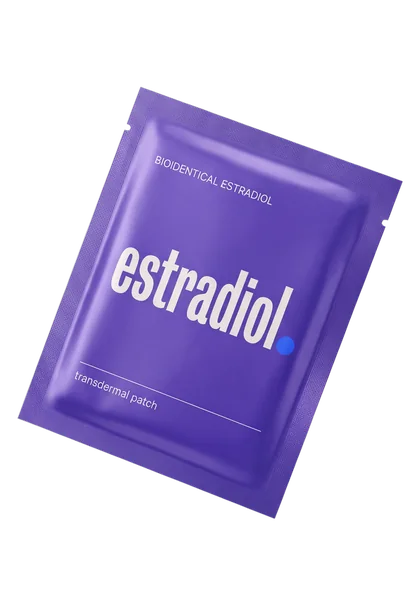
Blood clots (venous thromboembolism, or VTE) and stroke are the risks most tied to how estrogen enters the body. Pills pass through the liver first; patches and gels go through the skin.
| Oral estrogen (pill) | Transdermal estrogen (patch or gel) | |
|---|---|---|
| Blood clots | Higher risk with hormone therapy; lower oral doses may carry less risk than higher doses | Not associated with VTE risk in observational studies; limited data suggest less risk than oral |
| Stroke | Lower doses may carry less risk (observational data) | Lower doses may carry less risk (observational data) |
| Head-to-head randomized trials | None available | None available |
Age changes the size of the risk too. In a 2020 meta-analysis cited by The Menopause Society, starting hormone therapy at 60 or older, or 10 or more years after menopause, raised the risk of blood clots (summary estimate 1.79) and stroke (1.17). For women who started before 60 or within 10 years, that analysis found no significant effect on clots, although a 2015 Cochrane review did find a higher clot risk in the same group. In the WHI, the attributable stroke risk in women starting estrogen plus progestin before 60 was 5 per 10,000 per year, which the statement calls rare.
The statement adds that micronized progesterone may be less likely to cause clots than other progestins. If you have clot risk factors, ask about a patch or gel: estradiol patch vs pill compares the two.
Heart disease and the timing of treatment
For healthy symptomatic women under 60 or within 10 years of menopause, The Menopause Society says the favorable effects of hormone therapy on coronary heart disease and all-cause mortality should be weighed against the rare increases in breast cancer, clots and stroke. Women who start later face higher absolute risks. Hormone therapy is not approved to prevent heart disease, and nobody should take it for that reason alone.
That age pattern is the timing hypothesis, tested in the KEEPS and ELITE trials. Our guide on when to start HRT explains what those trials found.
The FDA boxed warning in 2025 and 2026
Estrogen products have carried a boxed warning, FDA's most prominent label warning, since the WHI. On November 10, 2025, FDA announced it was initiating removal of the references to cardiovascular disease, breast cancer and probable dementia from that warning, while keeping the endometrial cancer warning on systemic estrogen-alone products. It also said the labeled recommendation for systemic hormone therapy will be to start within 10 years of menopause onset or before age 60.
On February 12, 2026, FDA approved the new labeling for the first six products, covering all four categories of menopausal hormone therapy, and said 29 companies had submitted proposed changes. Labels are being updated product by product, so the wording on your package may still be the older version. For the side effects on current labels, see HRT side effects.
Who should not take HRT
The Menopause Society lists these contraindications for oral and transdermal hormone therapy:
- Unexplained vaginal bleeding
- Liver disease
- A prior estrogen-sensitive cancer, including breast cancer
- Prior coronary heart disease, stroke, heart attack or blood clot
- A personal history or inherited high risk of clotting disorders
If one of these applies, hormone-free treatment can still help with hot flashes: see the non-hormonal option. Low-dose vaginal estradiol is a separate, local treatment with its own considerations.
How Gala screens before prescribing
Every Gala intake is checked against written clinical rules before a provider decides. Among them:
- A history of heart attack, stroke or TIA, blood clots, lupus, liver or kidney disease, or endometrial, ovarian, cervical or colon cancer rules out systemic estradiol.
- A history of breast cancer or atypical ductal hyperplasia rules out systemic estradiol and requires a live video visit with the provider.
- Migraine with aura rules out estrogen, while progesterone can still be considered.
- Nicotine use rules out oral estradiol; a patch or gel can still be prescribed.
- Blood pressure of 150/90 or higher rules out systemic hormone therapy.
- Bleeding after menopause is sent for in-person evaluation instead of treatment.
If you have a uterus and take estradiol, progesterone is added to protect the uterine lining. You can read more about each treatment on the estradiol and progesterone pages, or see how hormones help specific symptoms like night sweats and sleep problems. The hormone health hub explains the full program, and you can start your menopause assessment in about 5 minutes.
Frequently asked questions
Is HRT safe for women over 60?
Starting HRT after 60 carries higher absolute risks of heart disease, stroke, blood clots and dementia than starting earlier, so The Menopause Society says it needs careful individual consideration. Women who started earlier and are doing well do not need to stop routinely at 60 or 65.
Is HRT safe for women over 50?
For most healthy women in their 50s who are within 10 years of menopause and have no contraindications, The Menopause Society says the benefits outweigh the risks for treating bothersome hot flashes and preventing bone loss.
Does HRT cause breast cancer?
Estrogen plus a progestogen slightly raises breast cancer risk: less than one extra case per 1,000 users a year in the WHI. Estrogen alone, used by women without a uterus, was linked to fewer breast cancers in the WHI. Risk rises with longer use.
Does HRT cause blood clots?
Oral estrogen raises the risk of blood clots, more so when started after 60. Transdermal estrogen from a patch or gel has not been associated with clot risk in observational studies, though no head-to-head randomized trials exist.
Is it safe to take HRT long term?
There is no arbitrary age at which HRT must stop. The Menopause Society says longer use can be considered for persistent symptoms or fracture prevention in healthy women at low risk, with the lowest effective dose and regular reevaluation.
Who should not take HRT?
Women with unexplained vaginal bleeding, liver disease, a prior estrogen-sensitive cancer such as breast cancer, a history of heart disease, stroke, heart attack or blood clots, or a high inherited risk of clotting should not take oral or transdermal hormone therapy.
Ready to talk to a provider?
Your answers go to a licensed provider, who decides whether treatment is right for you. Learn more about Hormone Health.
Treatments: Estradiol pill or patch online · Progesterone for menopause · Vaginal estrogen online · Non-hormonal menopause treatment
More Hormone Health guides
- estradiol patch vs pill
- HRT side effects
- perimenopause vs menopause
- progesterone for sleep
- best online HRT providers
- how to get an estradiol prescription online
- HRT for perimenopause
- HRT cost without insurance
- bioidentical hormones
- when to start HRT
- online menopause doctor
- HRT after hysterectomy
- Midi Health alternatives
- HRT and GLP-1 together
- Veozah alternatives
Sources
- The 2022 hormone therapy position statement of The North American Menopause Society. Menopause. 2022;29(7):767-794. Full text.
- Rossouw JE, et al. Risks and benefits of estrogen plus progestin in healthy postmenopausal women: principal results from the Women's Health Initiative randomized controlled trial. JAMA. 2002;288(3):321-333.
- Anderson GL, et al. Effects of conjugated equine estrogen in postmenopausal women with hysterectomy: the Women's Health Initiative randomized controlled trial. JAMA. 2004;291(14):1701-1712.
- Manson JE, et al. Menopausal hormone therapy and health outcomes during the intervention and extended poststopping phases of the Women's Health Initiative randomized trials. JAMA. 2013;310(13):1353-1368.
- Manson JE, et al. Menopausal hormone therapy and long-term all-cause and cause-specific mortality: the Women's Health Initiative randomized trials. JAMA. 2017;318(10):927-938.
- Stuenkel CA, et al. Treatment of symptoms of the menopause: an Endocrine Society clinical practice guideline. J Clin Endocrinol Metab. 2015;100(11):3975-4011.
- FDA. HHS Advances Women's Health, Removes Misleading FDA Warnings on Hormone Replacement Therapy. November 10, 2025.
- FDA. FDA Approves Labeling Changes to Menopausal Hormone Therapy Products. February 12, 2026.
This article is for general information and is not medical advice. Talk to a licensed provider about your own health.