Female fertility test: hormones and pelvic ultrasound
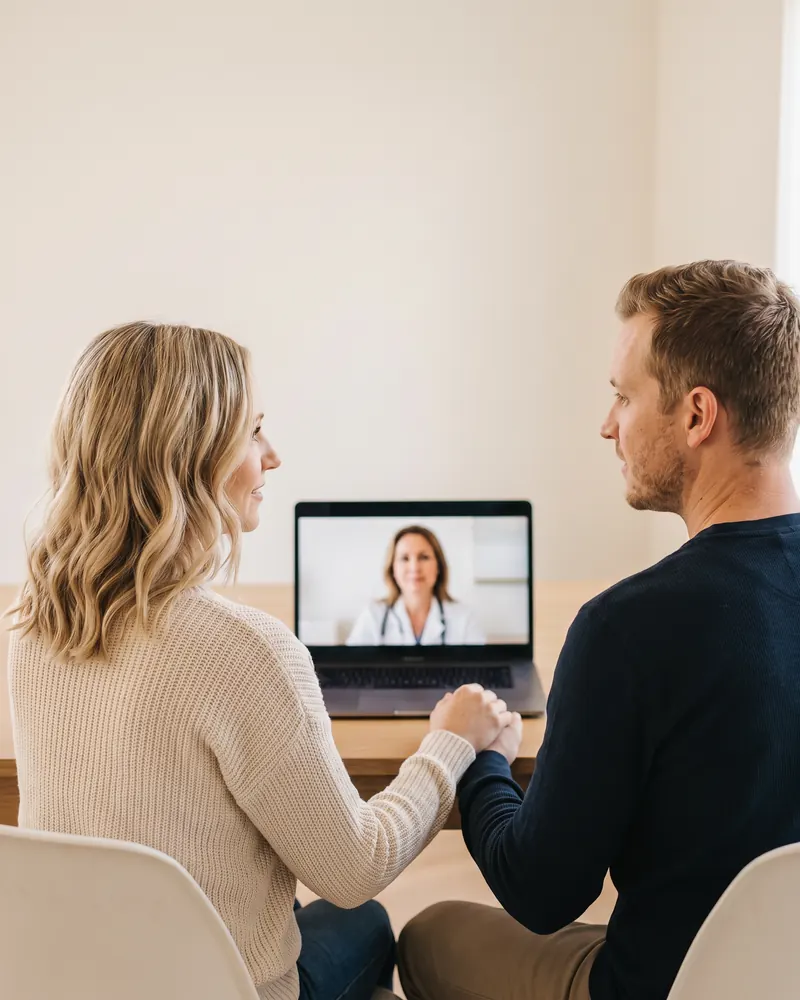
Her part of the workup is bloodwork at a Quest lab and a pelvic ultrasound at a location near you. A licensed clinician reviews every result alongside his, then explains them to you both on one video visit.
For male-female couples, both partners 18 or older.
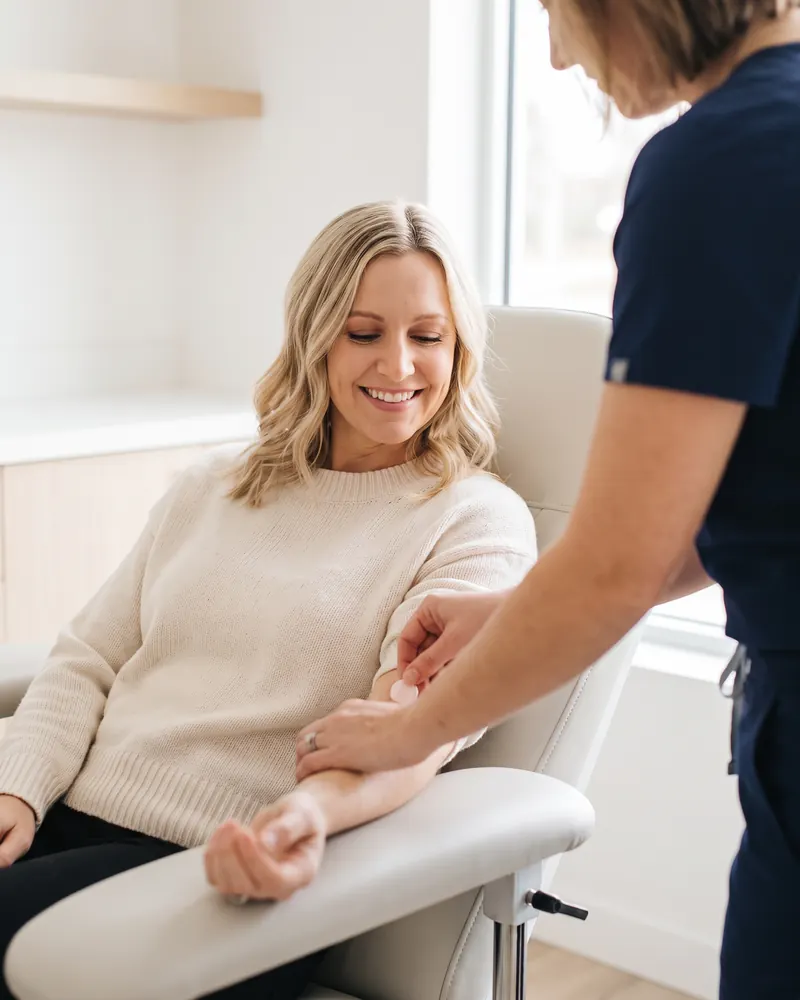
Why her bloodwork is on day 2 to 5
FSH, estradiol and LH are read at the start of the cycle, so the timing matters. Day 1 is the first day of full flow. AMH and the screening tests are not affected by timing.
The pelvic ultrasound
A transvaginal ultrasound of the ovaries and uterus. It counts the small follicles in each ovary and looks for cysts, fibroids or differences in the shape of the uterus. A clinician orders it after reviewing your intake, and the imaging team contacts you to book it.
When in-person care comes first
Some findings are best treated in person, such as blocked fallopian tubes, low ovarian reserve, changes in the uterus or certain semen results. If your results show one of these, your clinician refers you to a fertility clinic or a reproductive urologist and explains why.
Her tests
All of it is included. Open any test to see what it measures.
Her
Fertility hormonesAMH, FSH, estradiol, LH, prolactin and TSH.
AMH gives an estimate of ovarian reserve. FSH, estradiol and LH show how your ovaries and brain are signaling at the start of your cycle. Prolactin and thyroid (TSH) can both affect ovulation.
Preconception screeningHIV, hepatitis B, hepatitis C, chlamydia, gonorrhea and syphilis, plus immunity to chickenpox (varicella), rubella and measles.
Infections are best treated before trying to conceive, and it helps to know whether you are protected against infections that matter in pregnancy. Chlamydia and gonorrhea use a urine sample.
Pelvic ultrasoundA transvaginal ultrasound of the ovaries and uterus.
It counts the small follicles in each ovary and looks for cysts, fibroids or differences in the shape of the uterus. A clinician orders it after reviewing your intake, and the imaging team contacts you to book it.
Bloodwork at a Quest lab, walk in, no appointment needed. Go on day 2 to 5 of your period (day 1 is the first day of full flow): the cycle-day hormones are read then.
Questions, answered
Why does her bloodwork have to be on day 2 to 5?
FSH, estradiol and LH are read at the start of the cycle, so the timing matters. Day 1 is the first day of full flow. AMH and the screening tests are not affected by timing.
Does she need an appointment for the bloodwork?
No. Her bloodwork is at a Quest lab that takes walk-ins, on day 2 to 5 of her period.
How is the ultrasound booked?
A clinician orders it after reviewing your intake, and the imaging team contacts her to schedule it at a location near you.
What if a result comes back out of range?
Your clinician reviews it, explains it and tells you what comes next. That can mean more testing, treating an infection before any fertility treatment, a vaccine through your primary care provider if you are not immune, or a referral.
What does the price include?
Everything in the program, for both of you: the intake and clinician review, her bloodwork and ultrasound, his semen analysis kit and bloodwork if indicated, your video visit, medication each cycle if prescribed, cycle check-ins and messages with your care team. No hidden fees and no extra cost for tests.
Everything included
One membership covers both of you. No hidden fees, no surprise lab bills, no extra cost for tests.
- Your shared intake, reviewed by a licensed clinician
- Her bloodwork at a Quest lab
- His bloodwork, if your clinician indicates it
- His semen analysis, with a kit sent home
- Her pelvic ultrasound
- Every result reviewed and explained
- Your video visit, together
- Medication shipped to your door each cycle, if prescribed
- A check-in at the end of every cycle
- Up to six treatment cycles
- Messages with your care team
Not included: IUI, IVF or other in-person care at a clinic you’re referred to.
Start together